Home | Product Design | Native App

Designing a Modern, Multi-Brand Lobby for the Global Poker Market

TL;DR

I identified critical friction in the lobby-to-table journey and proactively pitched a research-led optimisation strategy to my PM. This initiative secured stakeholder buy-in for a new workstream that streamlined game discovery and directly boosted game-launch OKRs.

Let me see the designs already! >

Working alongside a team of product designers, product managers, analysts and engineers, my role on this project was:

Discovery

UX

Strategy

UI


20% expected increase in game launch rate


The Challenge

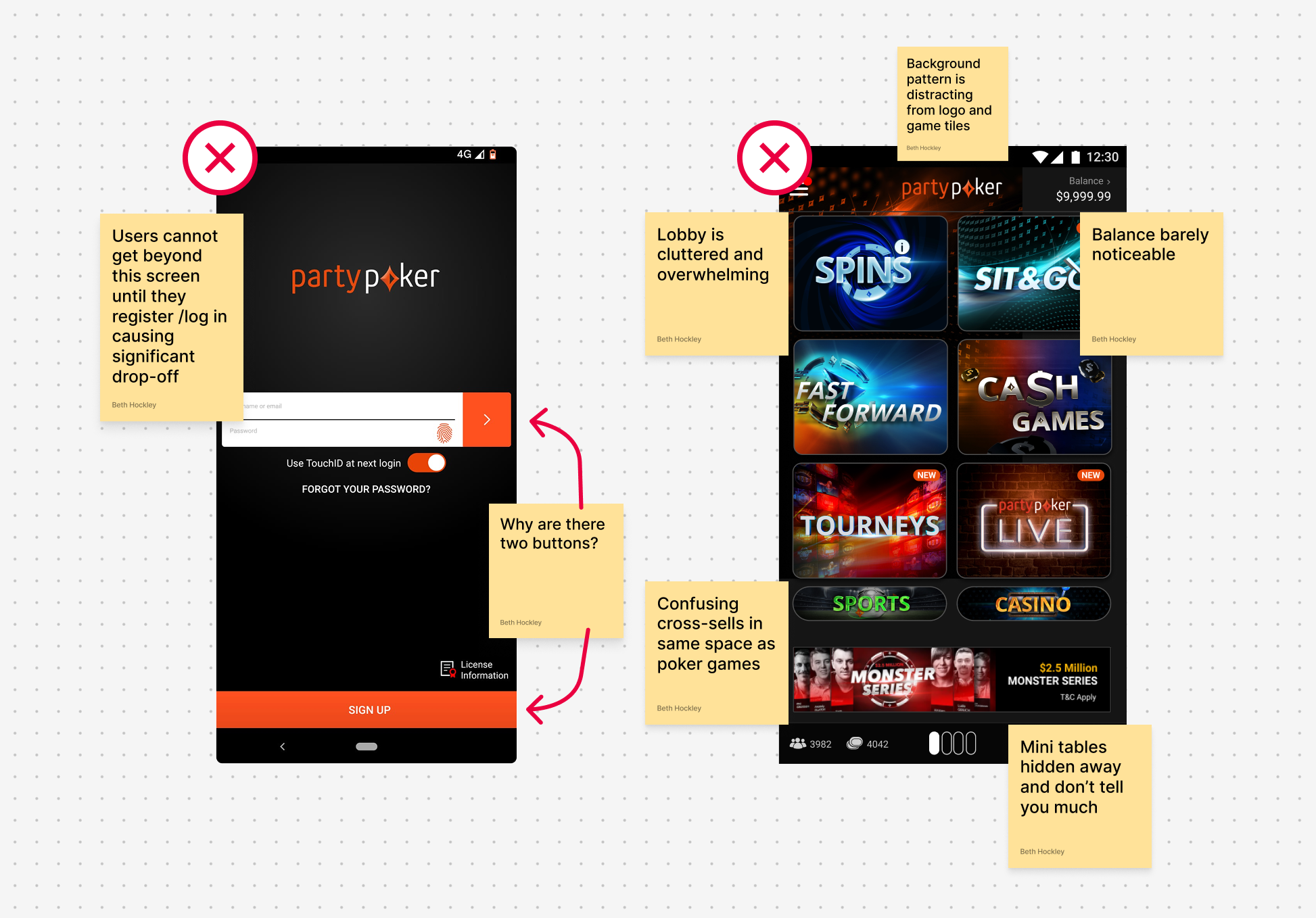
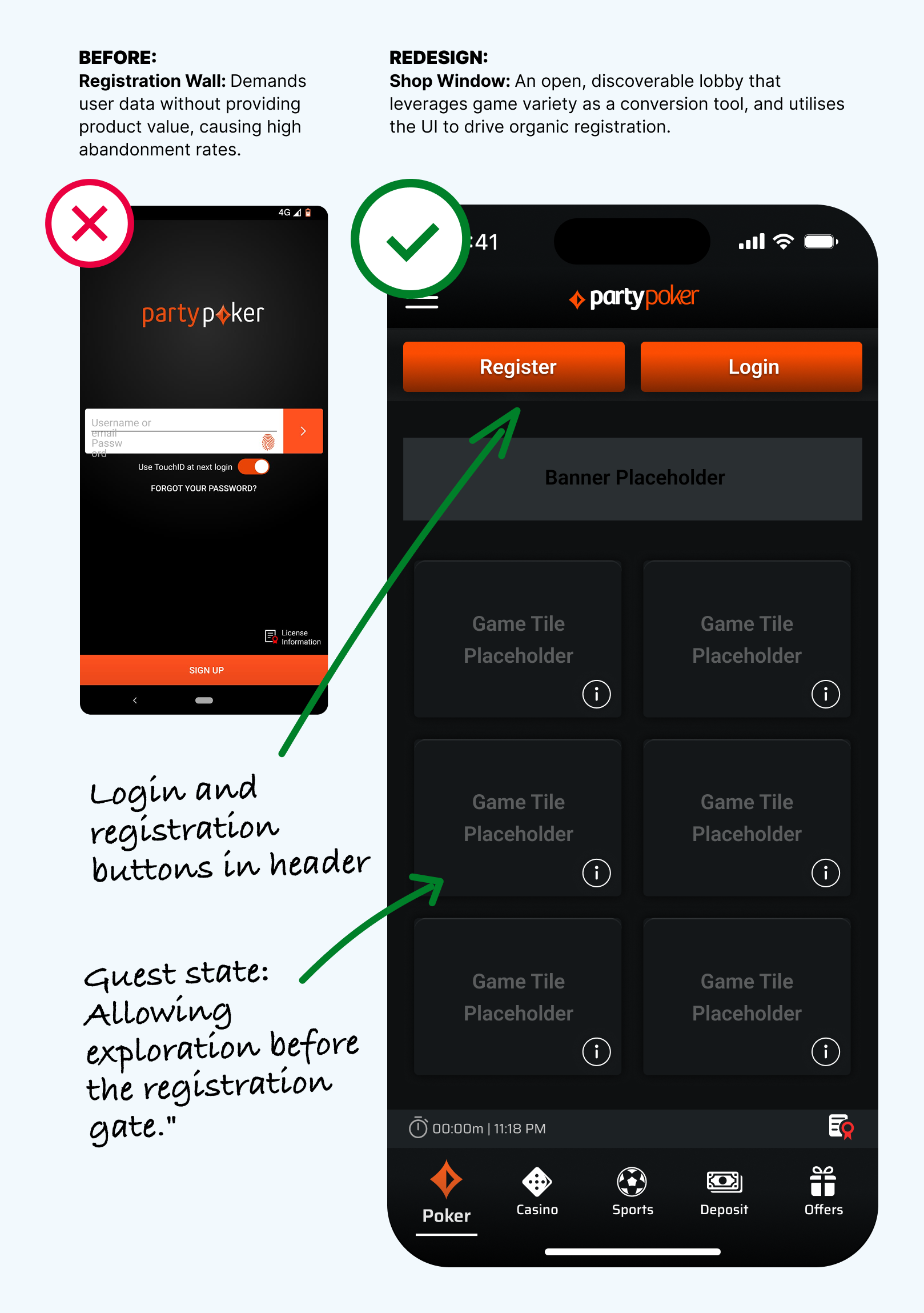
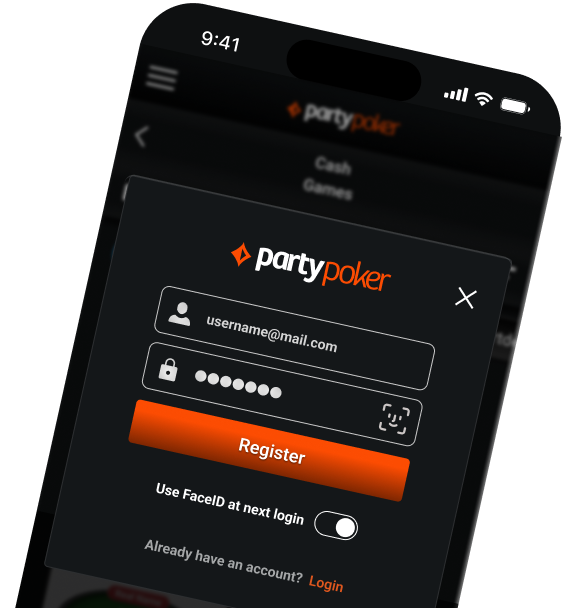
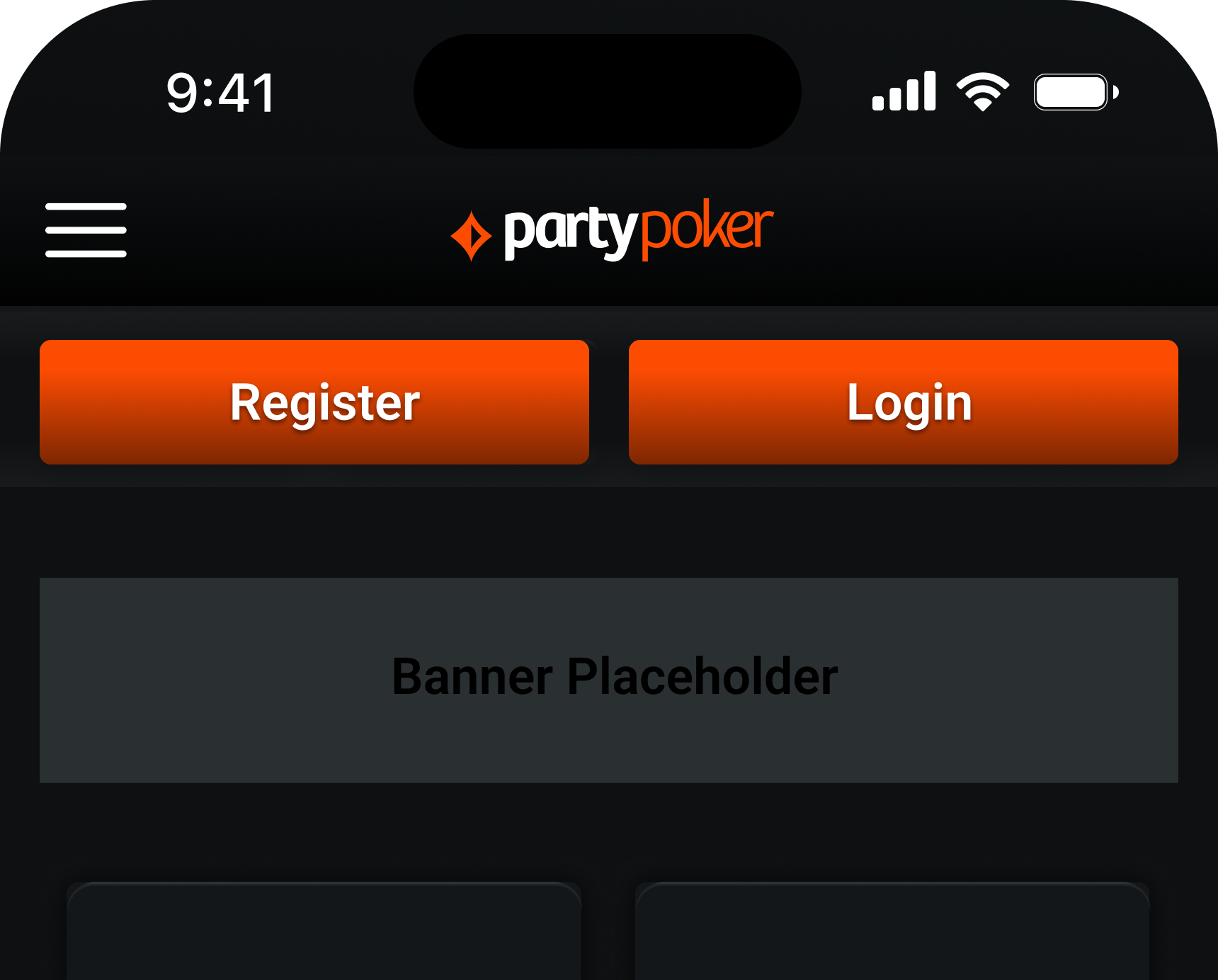
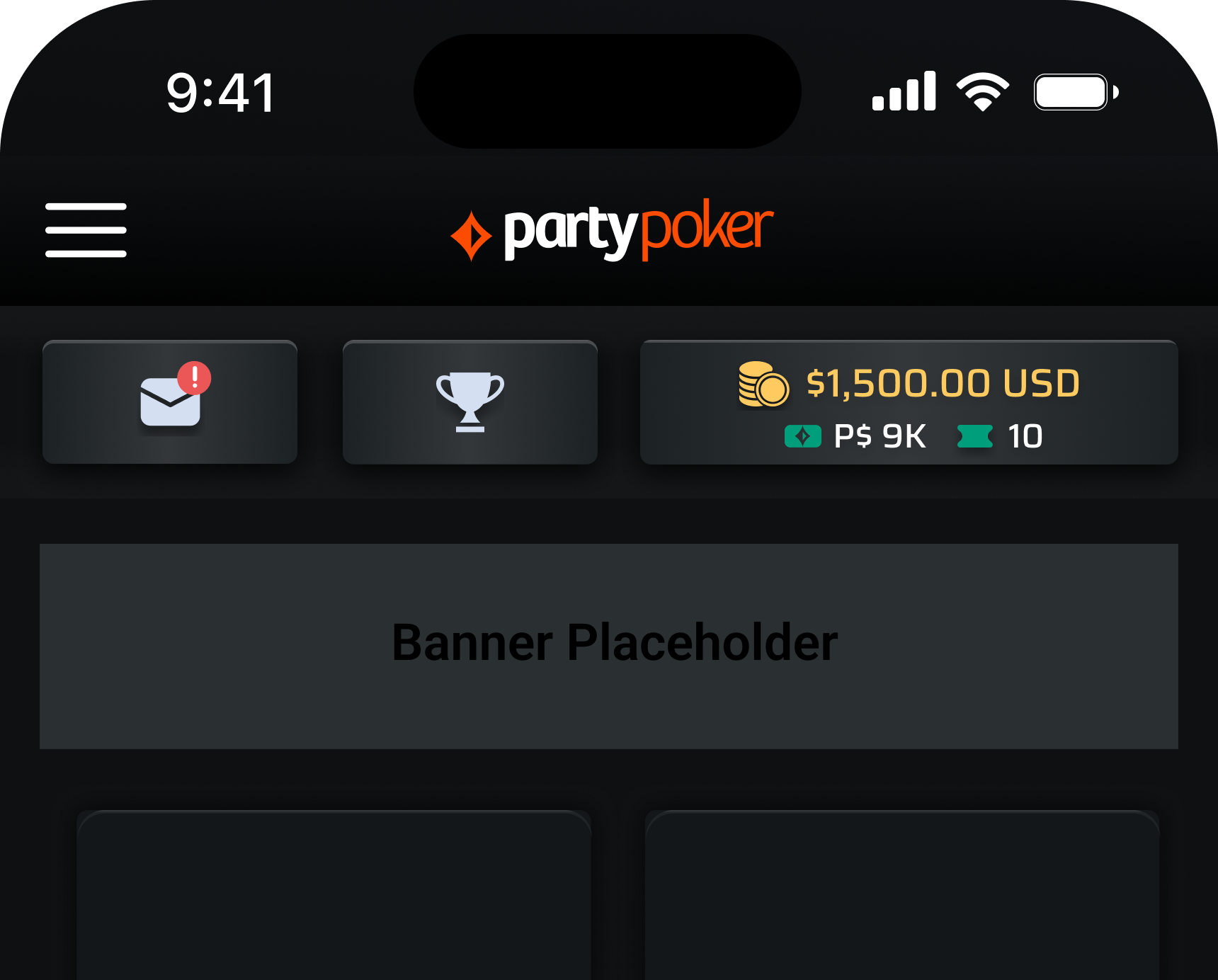
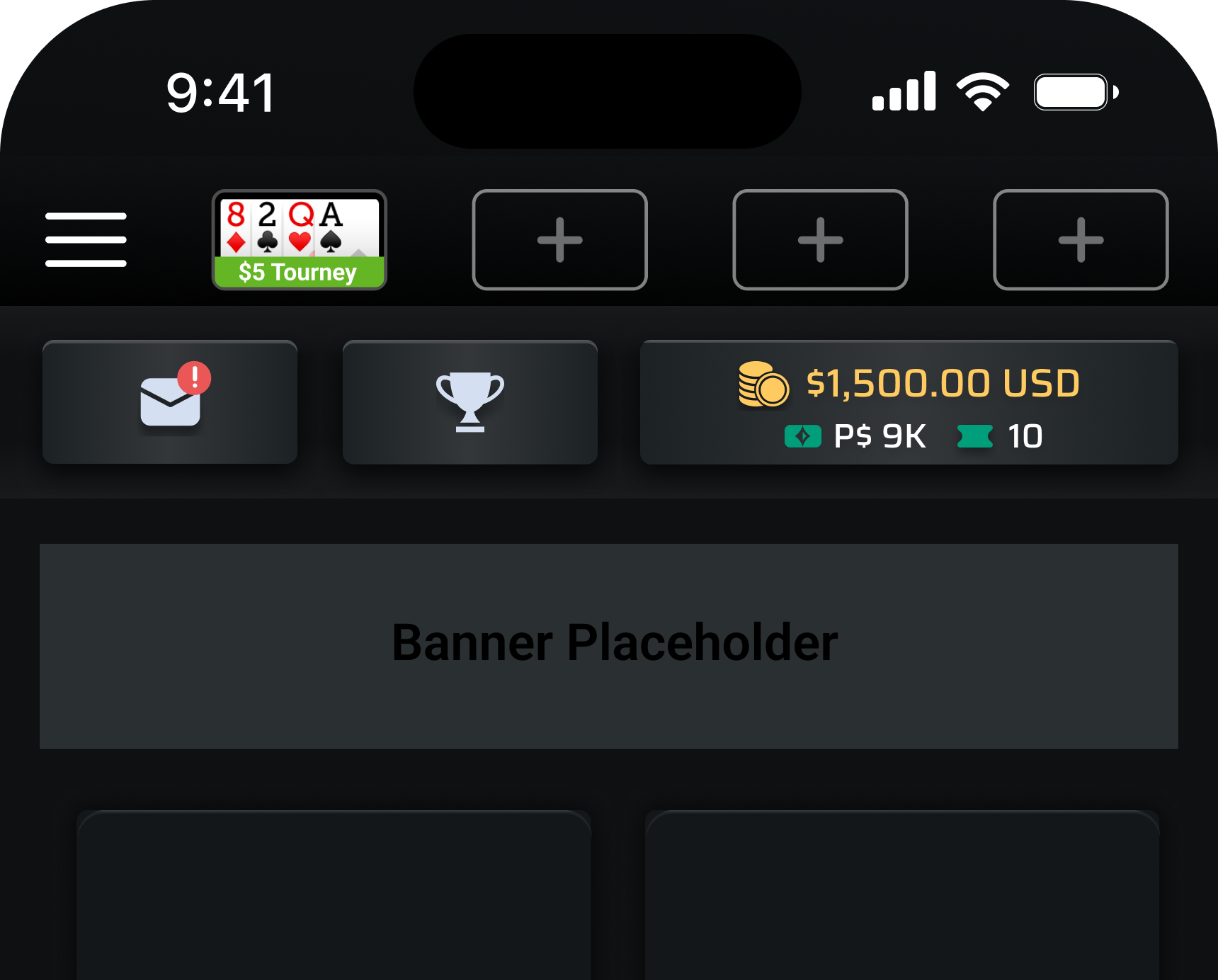
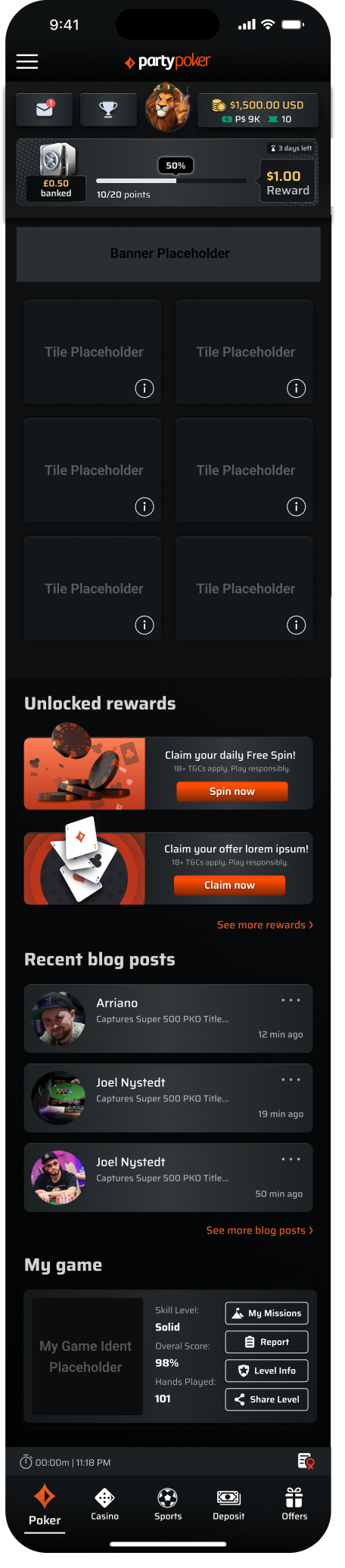
The legacy partypoker app functioned like a "black box." New users were met with a rigid registration wall before seeing a single game, leading to significant drop-off at the front door. For existing users, the lobby was cluttered and overwhelming, making it difficult to find core utilities like their balance, inbox, or active tournaments.

My initial brain-dump of the 10+ friction points and feature opportunities identified during the audit.

Plugging the Leaks: A UX Audit

Instead of ignoring these out-of-scope issues, I documented & categorized the specific friction points that were obstructing the player journey.

Discovery Friction: Players had to hunt for games. I identified a lack of “recently played” or “recommended / featured games” sections, forcing users to start their search from scratch every session.

Navigation & Logic Gaps: Instead of using empty states to guide or cross-sell, the app presented a dead end with no path back to the action creating a significant "bounce" risk.

Missed Incentives: We weren't making it easy for players to use their rewards. There was no ticket indicator in the lobby to show players exactly which games they already had free entry for.

Visual Clarity & Trust: The main lobby tiles and specific game tiles were cluttered and confusing making it hard to select a game.

The friction map: Identifying issues in the existing lobby

The Pitch

I collated these observations into a high-level UX audit and took them to my Product Manager. Rather than just pointing out "bad design," I framed the conversation around Business Value:

If we reduce the friction in the lobby, we can directly impact our game-launch OKRs and increase player retention without needing to build entirely new features.”

Feature matrix comparing BetMGM to their 3 main competitors

The Result: A New Workstream

My PM agreed that these improvements were vital but needed data to move them up the roadmap. He created a dedicated Research & Discovery ticket for me to lead during my project downtime. This allowed me to gather the evidence needed to secure full stakeholder buy-in and officially prioritize the "Path to the Table" redesign.

Key Objectives


Efficiency: Accelerate the "Path to Play"


Goal: Eliminate the manual "search and find"process for returning players.

Metric: Positively affect game-launch OKRs by reducing the "time to table"


Key Action: Implement a "Recently Played" section for instant access

Drive Intentional Discovery (Personalization)


Goal: Surfaces the right opportunities to the right players at the right time.

Metric: Increase utilization of player rewards and engagement with featured content.


Key Action: Add In-Lobby Ticket Indicators to highlight "free-to-play" opportunities and replace blank Empty States with strategic Cross-Sells to keep the user journey moving.

Enhance Visual Trust & Clarity (Usability)


Goal: Improve information density and user confidence during game selection.

Metric: Decrease lobby bounce rates by providing clarity


Key Action: A complete overhaul of Main & Game Lobby Tiles to be distinct and offer clearer information density.

The Solution: 
Balancing Quick Wins & Strategic Redesign

With 10+ potential improvements identified, I led a collaborative FigJam workshop with my Product Manager, Engineering leads, and fellow designers.


Our goal was to weigh each ticket against three criteria: User Value, Design Consistency, and Technical Effort. This alignment ensured that our roadmap was both ambitious and achievable, allowing us to separate immediate "Quick Wins" from deeper "Strategic Redesigns."

By involving engineering early in the FigJam session, we identified that Recently Played required backend support (High Effort), while Empty states & Ticket Indicators could be implemented via existing UI components (Quick Win). This allowed us to stagger the rollout for maximum impact.

Impact vs effort chart & sticker vote

Phase 1: The Quick Wins (Strategic Friction Fixes)‍


Solving the "Dead End" in My Tourneys

The Problem: If a user hadn't registered for a game, they were met with a single, unhelpful line of text: "You have not registered for any tournaments." It was a literal dead end: uninformative, unhelpful, and a missed opportunity for a cross-sell.


The Solution: I redesigned the empty state to be both informative and actionable. I replaced the static text with a clear directional prompt and a direct "Call to Action" to the Tournament Lobby. Additionally to add clarity and brand personality, I created and integrated a custom illustration. This provided a visual "anchor" for the page, making the empty state feel like a deliberate part of the experience rather than a broken page.


The Logic (The "Why"): By adding a direct link back to the Tournaments Lobby, I transformed a point of abandonment into a cross-sell opportunity. We went from telling the user what they hadn't done to encouraging what they could do next.


Reduces bounce rate by 25%

(Estimated)


The BetMGM Pivot: Rapid Brand Alignment

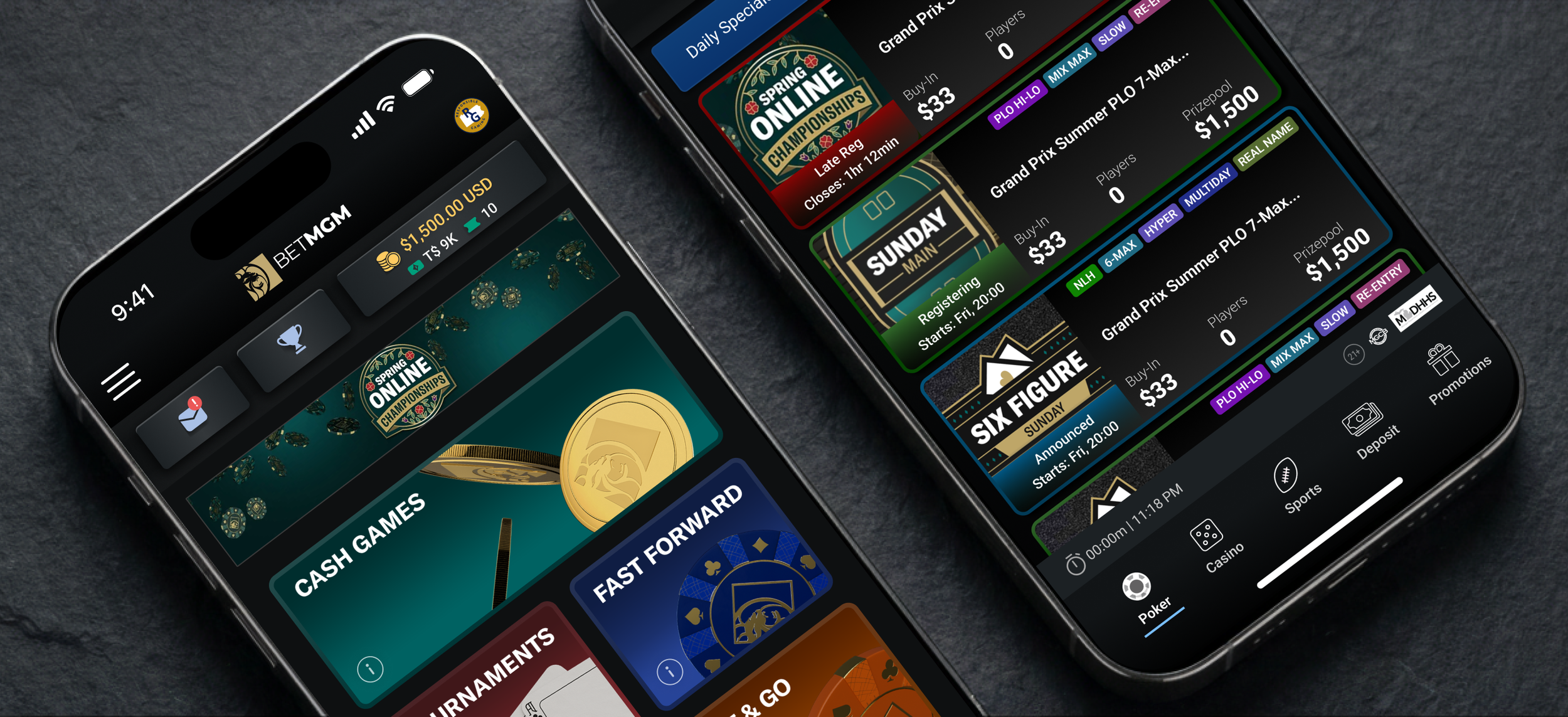
My initial audit immediately highlighted an immediate need on the BetMGM landing page. The app was still using 5-year-old legacy artwork from partypoker, creating a jarring, disjointed experience for a premium brand’s user base.

The Problem: A Brand Identity Crisis

Visual Debt: Legacy assets were outdated and off-brand for BetMGM’s sleek, gold-and-black identity.


Low Accessibility: The typography was over designed and difficult to read.


Lack of Trust: The disjointed UI made the app feel "white-labeled" rather than a bespoke BetMGM experience.

BEFORE: Lobby landing has outdated, inaccessible, 
off brand tiles

The 24-Hour "Sprint"

I was given less than a day to present a new visual direction. To move quickly, I adopted a "quantity-to-quality" approach:


Rapid Visual Exploration

I generated a high volume of "rough and ready" concepts to quickly test various illustration styles, lockups, and colour hierarchies against the BetMGM brand book.

Stakeholder Alignment

I filtered the 'rough & ready' options down to the three strongest routes to present to stakeholders, keeping the other options in my back pocket. By presenting a range of options, from "safe" to "bold", I allowed stakeholders to feel "part of the process," securing immediate buy-in.

Selection & Execution

We identified a "modern-sleek" route that utilised BetMGM’s core colours and a cleaner, more legible design.

A look behind the curtain: Rapidly iterating through visual concepts to find a style that felt both modern and authentic to the BetMGM brand.

The Result: From Legacy to Luxury

Within days of the pitch, the new tiles went live. The result was a cohesive, modern landing page that finally felt like a native BetMGM product. This "quick win" proved the value of the research phase and built the trust needed to move into the more complex Game Lobby redesign.te that utilized BetMGM’s core colors and a cleaner, more legible design.


12% Faster Navigation to Game Lobby

User testing data showed a 12% faster navigation rate, proving the new 'Lobby Tile' architecture significantly lowered the barrier to entry for returning players.


From pitch to production in days. A sleek, legible, and brand-authentic entry point.

Phase 2: The Strategic Redesign

Architecting a Unified Tile System

The core of the BetMGM experience happens in the game lobbies (Tournaments, Cash Games, Spins, etc.). While the Main Lobby tiles were the "front doors," the Game Lobby Tiles are where the final decision to play happens. My audit revealed a fragmented system: tiles were inconsistent, cluttered, designed for light mode while the app was dark, and lacked a clear data hierarchy.

Existing lobby tiles: cluttered, inconsistent design, no data hierarechy

1. Discovery: Defining the Data Hierarchy (User Testing)

Before starting the design phase, I needed to identify which information drives a player’s decision to register. I conducted Card Sorting via UserTesting.com to rank data points by their objective importance.

Results from one of our card sort tests

The Insight: Users prioritiSed Game Status and Buy-In above all else.

The Result: This research gave me the "blueprint" for the new tile hierarchy, ensuring high-value data was never buried.

A clip of a user participating in one of our tests

To ensure our data hierarchy wasn't influenced by the items in the card sort, the user testing began with a series of open-ended questions.


2. The "Master Tile": Stress-Testing Complexity

With the hierarchy defined, I began wireframing the Tournament Tile, as it was the most complex of the game tiles with the most data points.

The Strategy

I purposely designed for the "Worst-Case Scenario"—the rare moment a tile displays every possible data point (Stakes, Clock, Entrants, Late Reg) in the longest possible language.

Why this mattered

By solving for the most cluttered state first, I ensured the UI would remain clean and functional for the "Typical Case" and across global markets.

Engineering alignment

I consistently reviewed these wireframes with the engineering team to ensure the data mapping was technically feasible before moving into high-fidelity UI.

Anatomy of the Tournament Tile

Because BetMGM is a global brand, I stress-tested the tile layouts using 'worst-case' character counts. This ensured that our dynamic labels would remain legible and AA-compliant even in languages with significantly longer word strings, like German

The Stress Test: Accommodating 8+ data points and long-string translations

The Standard View: A streamlined experience for 90% of use cases

Status

The Strategy: Because testing identified Status as a primary driver, I developed a Colour-Coded Identification System. I implemented an AA-compliant status panel in the bottom-left, mirrored by a matching coloured stroke around the entire tile.

Why this mattered: This allows players to identify game states (Registering vs. Running) through peripheral vision alone.

AA-Compliant Status Stroke, Data Pills (Ranked by User Testing), and "Dynamic Labels for i18n

3. Execution: Scaling the System

Once the Tournament "Master Tile" was perfected and vetted by Engineers, I scaled the logic across the other four lobbies (Cash, Spins, etc.).

Achieving 100% design consistency across all game categories for a unified brand experience.

4. Special States: Rewards & Recency

The redesign allowed us to introduce two major revenue-driving features that were previously impossible due to the old UI:

Special ticket tile, in situ in a Cash Games lobby, making it super easy for a user to identify what games they have tickets for.

The "Golden Ticket" Reward

To surface "free-play" opportunities, I designed a specialised Ticket-Shaped Tile with a gold outline. This transformed a hidden reward into a high-conversion "hook."


The "Recently Played" Carousel:

I adapted the tile system into a narrower, carousel-friendly format. By adding Game Type Labels, we ensured that even in a condensed view, players knew exactly what they were jumping back into.

Impact & Results: From Friction to Flow

The redesign transformed the BetMGM lobby from a disjointed legacy interface into a high-performance, brand-aligned gaming engine. By prioritising user research and systematic consistency, we achieved three major outcomes:

1. Reduced "Time-to-Table"

By surfacing Game Status and Buy-ins through a research-backed hierarchy, we eliminated the "poking around" behavior. Users no longer had to click into a tournament to see if they could play; the data they needed was visible at a glance.

The Result: A more efficient path to play and a reduction in the cognitive load required to navigate the lobby.

2. Unlocking "Hidden" Value (The Ticket Hook)

The introduction of the "Golden Ticket" tile solved a major business pain point: underutilized rewards.

The Result: We turned static, forgotten rewards into active entry points. Users reported higher satisfaction as they could finally "see" the value of their loyalty rewards directly in the flow of play.

3. Total Brand Alignment & Scale

We successfully migrated the app from outdated 5-year-old assets to a cohesive, premium Dark Mode experience.

The Result: The landing page and lobbies finally felt like a native BetMGM product. The new Master Tile system is now fully scalable, allowing the engineering team to roll out new game types in hours rather than weeks, with 100% design consistency.

4. Positive User Sentiment

Post-launch feedback and follow-up testing showed that players felt the app was "sleeker", "faster" and "easier to read."

"The new tiles make it so much easier to see what's actually running. I don't feel like I'm hunting for a game anymore." - User Testing Participant

This project reinforced the importance of 'Stress-Testing' designs for the worst-case scenario. By solving for the most complex data points and internationalisation first, we created a system that is robust enough to grow with the brand for years to come.